Hold your own Burns Night!
Robert Burns – The iconic Scottish poet, with verse for mouse and louse and many a fair lass!
Whose life was made for back-breaking manual labour and yet became the celebrated status that today would require a Wikipedia entry and a million follower Instagram account. So how did it come that a boy from Ayrshire, born to farming parents in the village of Alloway, became the most celebrated Scottish poet of all time?
 The Rabbie Burns Story
William Burnes, a gardener turned tenant farmer from the north-east of Scotland saw that the young Burns never lacked another kind of culture, which paved the way for the voracious reader he became. He learned the three Rs, some French and much scripture. A natural inclination towards stories and songs, he would absorb traditional tellings and poems from his mother and a friend of hers, Betty Davidson. And so in his heart poetry was born, and the works of Alexander Pope, Henry Mackenzie and Laurence Sterne fired Burns’s poetic impulse. And love became his inspiration, with his first composition was a song for the girl he partnered in the harvest, Handsome Nell, for Nellie Kilpatrick.
Rarely having much time to sit and ponder poems, it became his habit to compose as he worked. His late twenties saw him newly hailed as the Ploughman Poet because his poems complemented the growing literary taste for romanticism and pastoral pleasures, and when Burns arrived in Edinburgh, he was welcomed by a circle of wealthy and important friends. Illicit relationships and fathering illegitimate children ran parallel to a productive period in his working life, but in 18 short months he had spent the majority of his wealth. He took a job as an Excise Officer, and his increasingly radical political views influenced many of the phenomenal number of poems, songs and letters. The hard work this new job entailed, combined with the toil of his earlier life and dissolute lifestyle began to take their toll on Burns’s health, and he died on 21 July 1796 aged just 37. His work and influence remains the most celebrated in Scots literature and poetry, the words resonating across centuries and still relevant and remembered today.
Celebrate Burns Night
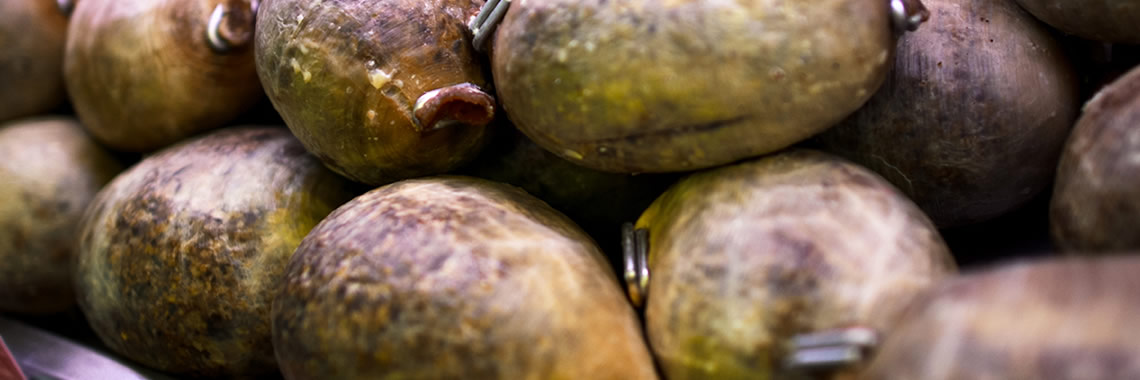
Burns Night is annually celebrated in Scotland on or around January 25, on Robert Burns’ birthday, born January 25 1759. It commemorates his life and celebrates Burns’ contribution to Scottish culture. Traditionally, the Scots dish of haggis, neeps and tatties is served up and the Haggis is “piped” in on a silver dish, meaning that the haggis is walked around the table lead by a man playing the bagpipes. There is then a recital of Robert Burns’ famous poem Ode to a Haggis, where he hails the Haggis as the “chieftain of the pudding-race” with a round, honest plump face, and talks of steaming deliciousness that fills all bellies. Never has a food been so immortalised in the written word. See for yourself….
Fair fa’ your honest, sonsie face,
Great chieftain o the puddin’-race!
Aboon them a’ ye tak your place,
Painch, tripe, or thairm:
Weel are ye worthy o’ a grace
As lang’s my arm.
The groaning trencher there ye fill,
Your hurdies like a distant hill,
Your pin wad help to mend a mill
In time o need,
While thro your pores the dews distil
Like amber bead.
His knife see rustic Labour dight,
An cut you up wi ready slight,
Trenching your gushing entrails bright,
Like onie ditch;
And then, O what a glorious sight,
Warm-reekin, rich!
Then, horn for horn, they stretch an strive:
Deil tak the hindmost, on they drive,
Till a’ their weel-swall’d kytes belyve
Are bent like drums;
The auld Guidman, maist like to rive,
‘Bethankit’ hums.
Is there that owre his French ragout,
Or olio that wad staw a sow,
Or fricassee wad mak her spew
Wi perfect scunner,
Looks down wi sneering, scornfu view
On sic a dinner?
Poor devil! see him owre his trash,
As feckless as a wither’d rash,
His spindle shank a guid whip-lash,
His nieve a nit;
Thro bloody flood or field to dash,
O how unfit!
But mark the Rustic, haggis-fed,
The trembling earth resounds his tread,
Clap in his walie nieve a blade,
He’ll make it whissle;
An legs an arms, an heads will sned,
Like taps o thrissle.
Ye Pow’rs, wha mak mankind your care,
And dish them out their bill o fare,
Auld Scotland wants nae skinking ware
That jaups in luggies:
But, if ye wish her gratefu prayer,
Gie her a Haggis
Collect your Haggis, Neeps and Tatties!
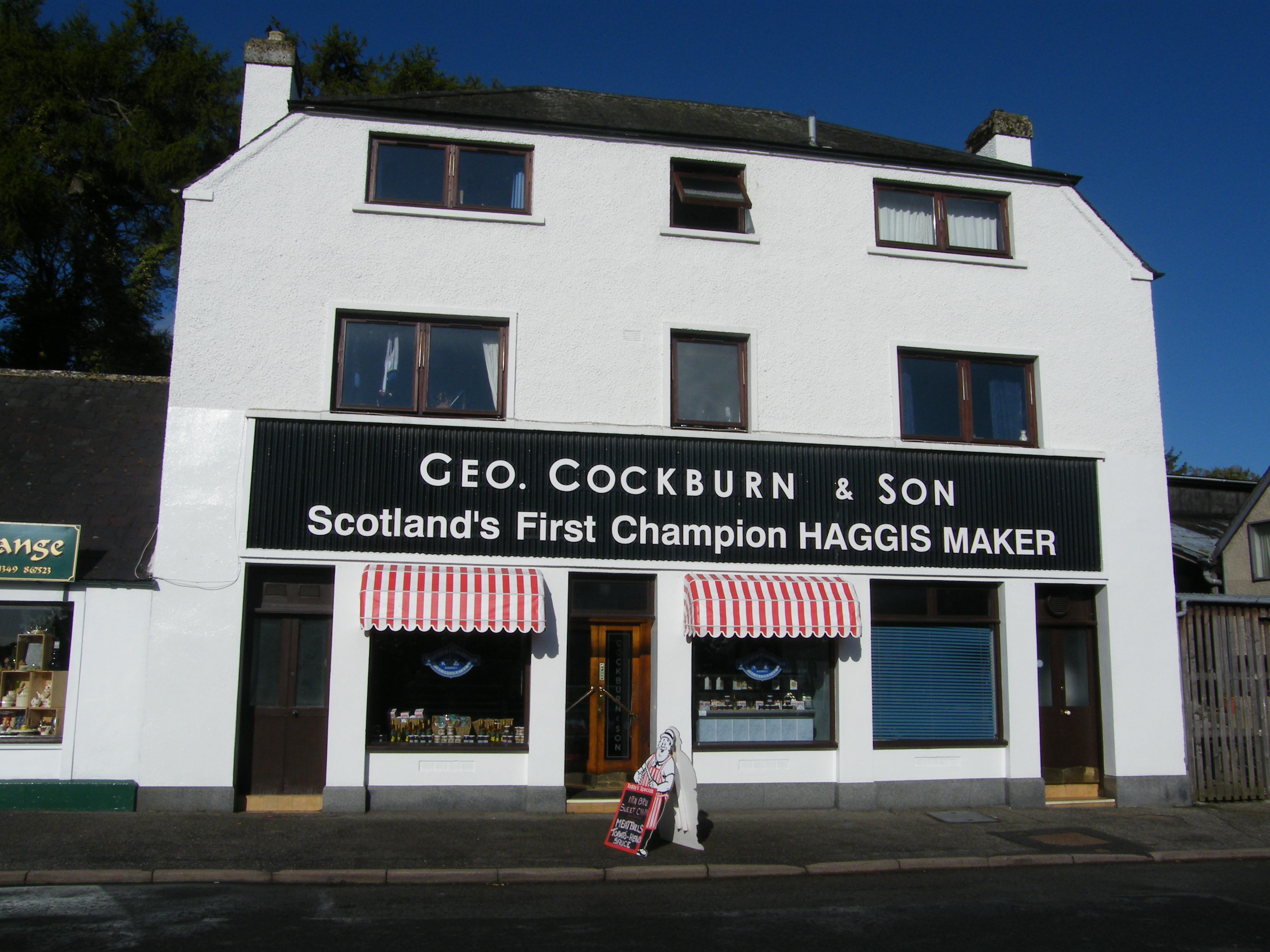
Ever had haggis? If not, you are in for a treat! The national dish of Scotland is an essential part of your Burns Supper. As you start your NC500 adventure, visit Cockburn’s Butchers in Dingwall – Scotland’s first champion haggis maker! Ask any Highlander – it is without doubt the best Haggis in Scotland! You can also obtain all three ingredients from The Storehouse Restaurant and Farm Shop, 10 minutes from Dingwall. ‘Neeps’ is another word for turnips and ‘tatties’ are of course potatoes – both are mashed and eaten with the haggis. For your whisky sauce, purchase a bottle during a tour of one of our finest distilleries.
Don’t worry if you don’t make it to the North Coast 500 for Burns Night; Haggis has moved on from a once a year meal on Burns Night to being used every day in a range of dishes at home and in restaurants and cafes alike. You can still rally your friends together for a cosy break along the NC500 and cook up your own Burns Night Supper. For a modern twist on the classic, you could even try haggis nachos, mac and cheese or a local favourite – haggis bon bons!