Experience History on the North Coast 500
The history of the North Coast 500 is as captivating as its landscapes. From Pictish stones to castle ruins, the route is lined with historical sites that showcase Scotland’s rich cultural heritage. Whether you’re a history buff or simply interested in learning more about the places you visit, the NC500 offers a wealth of fascinating historical landmarks. Ready to step back in time? Let’s dive into some must-visit spots along the route.
Culloden Battlefield (Inverness)
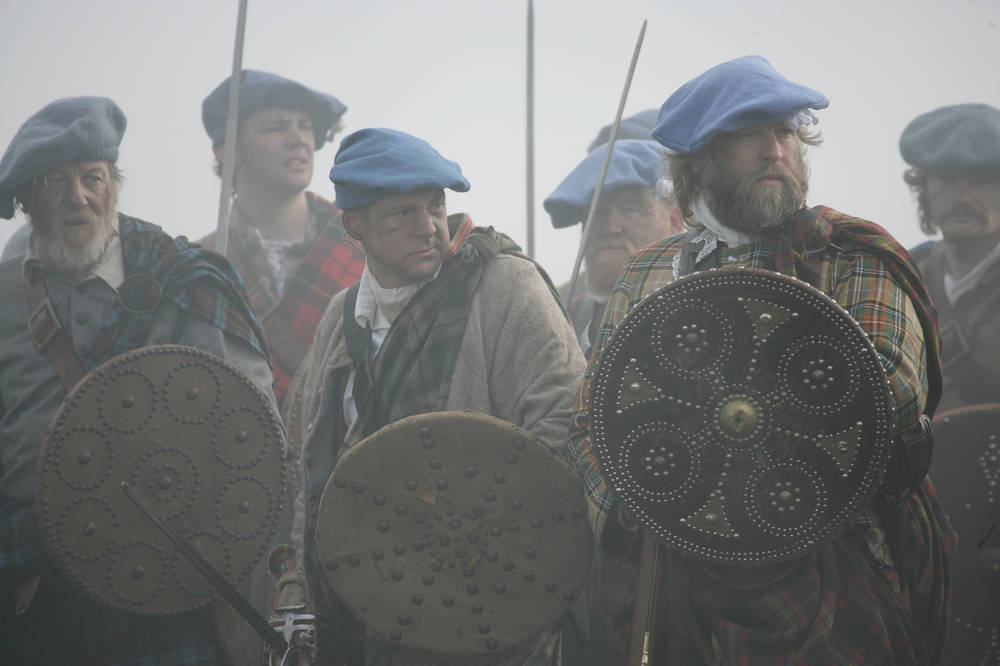
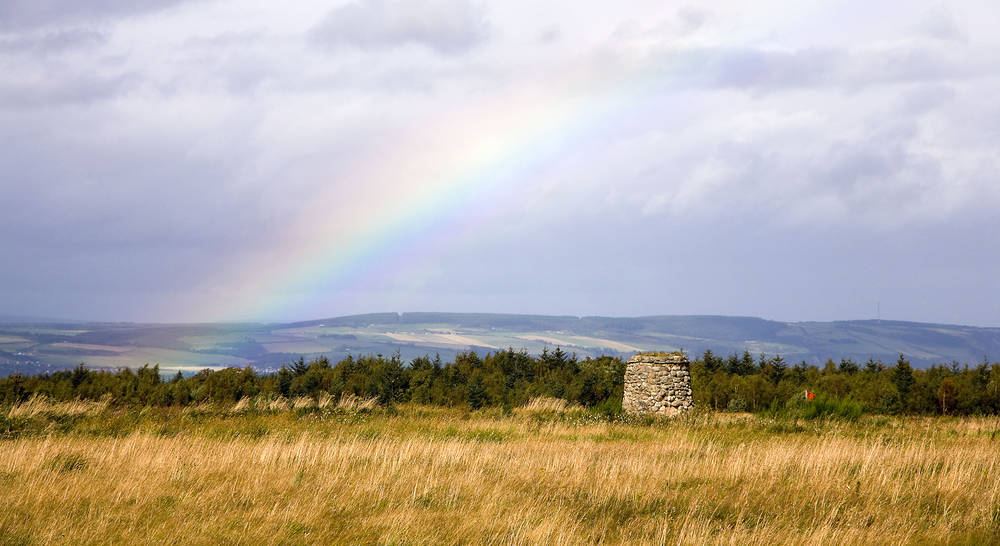
One of the most significant historical sites in Scotland, Culloden Battlefield marks the site of the last pitched battle on British soil. On April 16, 1746, the forces of the Jacobite rebellion, led by Bonnie Prince Charlie, faced off against the British army. The battle was a decisive defeat for the Jacobites, effectively ending the uprising and leading to the downfall of the Scottish Highlands’ clan system. Today you can explore the site, which features a visitor centre, memorial cairn, and a well-preserved battlefield where history was made. The Culloden experience is emotional and offers visitors a glimpse into Scotland’s turbulent past. Book Now.


Clava Cairns (Near Inverness)
Dating back to the Bronze Age, Clava Cairns is an ancient burial site made up of burial mounds and standing stones. Around 4,000 years old, this complex is believed to have been used for ritualistic and ceremonial purposes. The Cairns are aligned with the sunrise at the winter solstice, suggesting an advanced understanding of astronomy at the time. The area is eerily atmospheric, making it a must-see for history lovers and fans of Outlander, as it served as a filming location for the series.
Tarbat Discovery Centre (Portmahomack)
Located on the Tarbat Peninsula, the Tarbat Discovery Centre is home to fascinating exhibits on Pictish history. The centre displays numerous examples of Pictish art, including intricate stone carvings that tell the story of this mysterious ancient people. The Picts were an early Scottish tribe known for their elaborate designs, and Portmahomack was once a key religious site during their time. The site is known to be one of the earliest Christian sites in Britain dating from the 6th century. Nearby are the surviving ‘cross slab’ standing stones of Hilton, Shandwick and Nigg which are among the finest achievements of 8th century European Art.
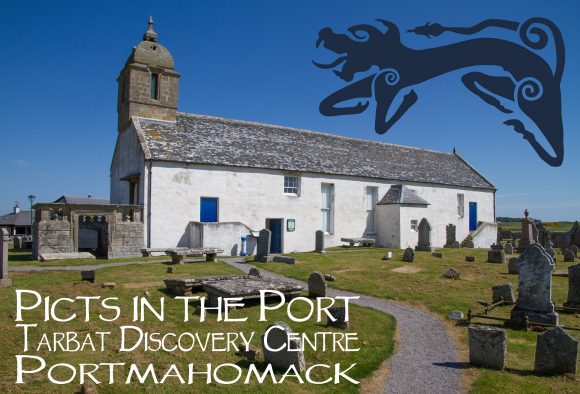
Tarbat Discovery Centre.
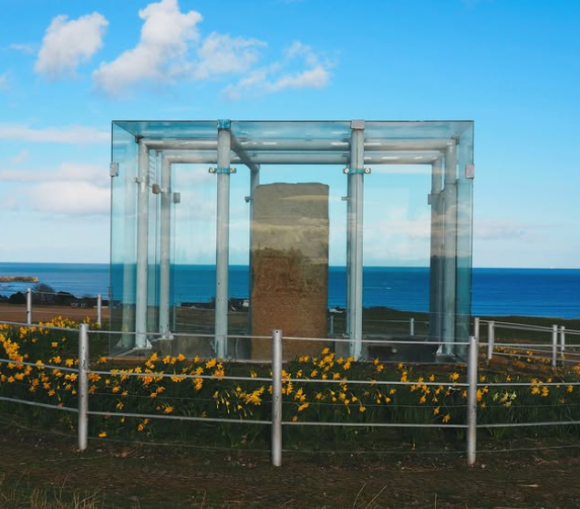
Shandwick Stone.
Grey Cairns of Camster (Near Lybster)
The Grey Cairns of Camster are two massive Neolithic burial cairns located near Lybster, offering a glimpse into Scotland’s prehistoric past. Thought to have been built over 5,000 years ago in the early 4th millennium. A cairn is typically a man-made stone structure used as a landmark or memorial, and these two in Camster are said to be some of the best preserved in Britain. Human remains have been found within them, leading historians to believe they were once used as burial tombs. Some archaeologists suggest that their remote location is part of the reason why they are so well preserved today. The larger cairn, known as Camster Long, is especially impressive, with a series of chambers inside that are thought to have been used for rituals as well as burials. These ancient structures are a must-see for anyone interested in Scotland’s earliest history.
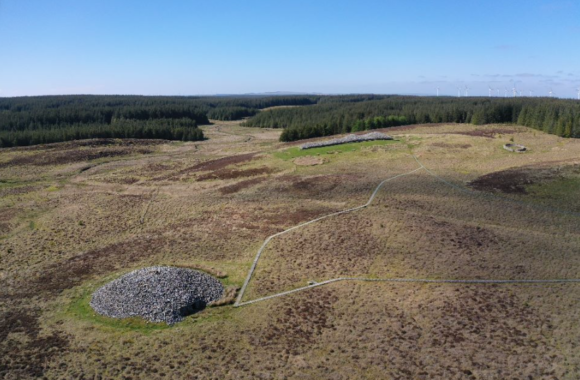
Grey Cairns of Camster.
Whaligoe Steps (Near Wick)
Whaligoe Steps offers an interesting blend of natural beauty and history. These 365 steps were once used by fishermen and their families to reach the fishing village below. The path leads to Whaligoe Harbour, a steep-sided bay that was once one of the busiest fishing ports in the region. Follow in the footsteps of the fisherwoman, who used to haul baskets of fish up the man-made steps every day during the booming 1800s, before they were taken on foot to be sold in nearby Wick, some 7 to 8 miles away. Whaligoe Steps offer fantastic views of the sea, making the walk to the bottom both a scenic and historical experience.
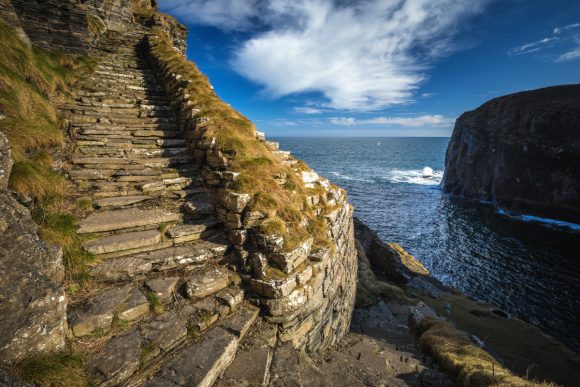
Whaligoe Steps.
Ardvreck Castle (Near Loch Assynt)
Ardvreck Castle, located on the shores of Loch Assynt, is a hauntingly beautiful ruin steeped in history. This historic gem carries tales of clan rivalries and dramatic battles. Built in the early 1490s by the Scottish Clan MacLeod, this once towering fortress endured handovers, attacks, and an eventual capture by Clan Mackenzie in 1672. Sadly, the castle met its end in a fiery blaze in 1737 and has remained a haunted ruin ever since. Local legends speak of two ghosts who still linger there – a tall man clad in grey, thought to be connected to the betrayal of the Earl of Montrose, and the weeping ghost of a clan chief’s daughter, who tragically threw herself from a window after being promised to the devil. Are you brave enough to visit this spooky site?
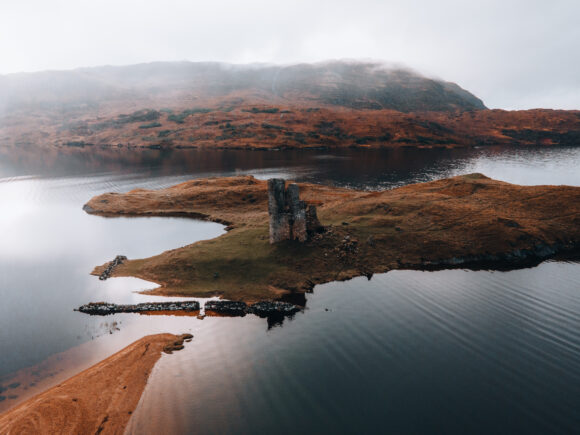
Ardvreck Castle.
Castle Varrich (Near Tongue)
Castle Varrich, located near the village of Tongue, sits on a hilltop overlooking the Kyle of Tongue. The exact origins and age of the castle remain a mystery however, it is thought to have been built in the 16th century by the Clan Mackay. The castle tower is now a ruin, but it still offers incredible views of the surrounding landscapes.
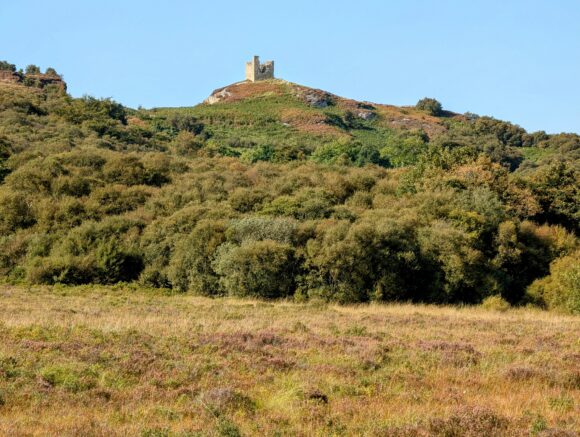
Castle Varrich.
Smoo Cave (Durness)
Located near Durness, Smoo Cave is one of the largest and most dramatic sea caves in Scotland. The name is thought to originate from the Norse ‘smjugg’ or ‘smuga’, meaning a hole or hiding-place. The cave has been used for thousands of years, with evidence of prehistoric habitation. The cave’s natural beauty, with its stunning waterfalls and chambers, makes it a unique site to explore.
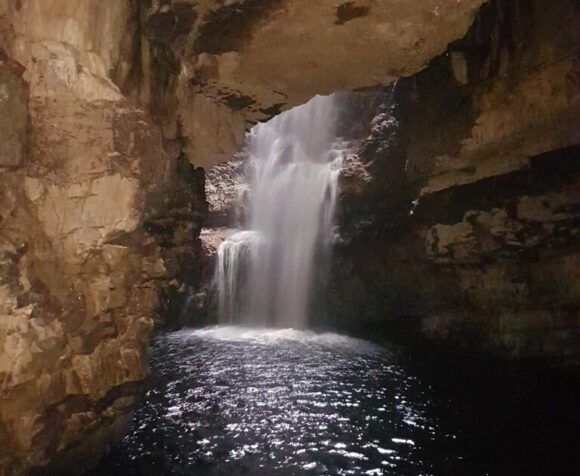
Smoo Cave.
Bone Caves (Inchnadamph)
The Bone Caves of Inchnadamph are a set of caves that have yielded prehistoric bones. Located in the remote and stunning landscape of Assynt, the caves provide a fascinating insight into the area’s natural history. The caves were once used as shelter by early humans, and the bones found here offer clues about the animals that roamed the region thousands of years ago. Several archaeological excavations in the last 200 years have discovered bones from many creatures, now long gone from this part of the world. Remains of species like polar bears, reindeer, lemmings, wild horses, lynxes and wolves have all been found in the cave.
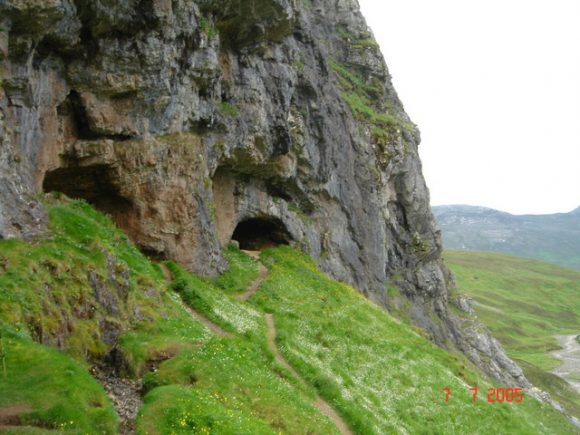
Bone Caves.
For even more inspiration on your North Coast 500 history trip, explore our History & Heritage section.
Reminder – Please be responsible as you explore! Always respect your surroundings, leave the historical sites exactly as you found them, and follow the Scottish Outdoor Access code.