15 Hidden Gems and Lesser-Known Places Along the North Coast 500
The North Coast 500 is full of spectacular scenery, memorable experiences and fascinating places to explore. Alongside its best-known highlights, the route is home to plenty of lesser-known spots that are well worth discovering. Whether you’re planning your first trip or returning to explore more of the Highlands, there’s always something new to see, especially when you take the time to explore a little further.
From ancient stone monuments and unusual coastal sculptures to woodland waterfalls and secluded beaches, discover 15 North Coast 500 hidden gems to add to your journey.
1. Fairy Glen (Rosemarkie)
Follow the winding woodland path into Fairy Glen, just outside Rosemarkie on the Black Isle, and discover a lovely stretch of mature woodland, moss-covered rocks and the gentle sound of the Rosemarkie Burn. The path crosses the stream and passes an old mill pond before reaching two waterfalls at the head of the glen. Keep an eye out for dippers along the water as you explore this peaceful corner of the Black Isle.
The walk is around 2km (1.25 miles) each way from the car park to the waterfalls. There are several sets of steps, and the path becomes steep, uneven and slippery in places, so sturdy footwear is recommended. Retrace your steps through the glen to return to the car park rather than walking along the busy A832.

2. Shandwick Stone (Shandwick)
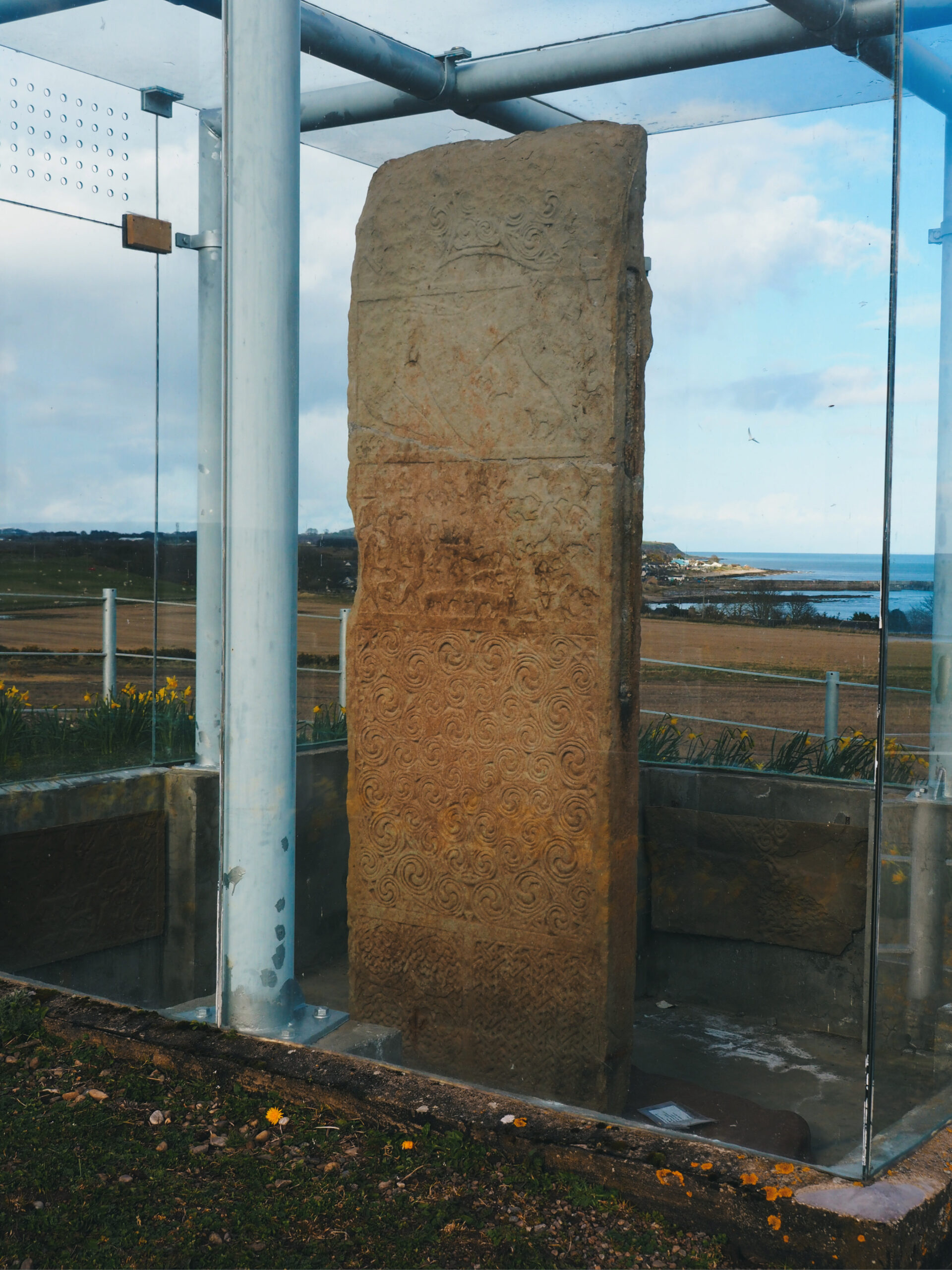
Standing on a hillside above the village of Shandwick, overlooking the Moray Firth, this remarkable Pictish stone offers a glimpse into Scotland’s early medieval past. Dating from around 780 AD, the sandstone monument stands nearly three metres tall and is intricately carved on both sides. One face features an ornate cross surrounded by angels and animals, while the other reveals Pictish symbols, horse riders, hunting scenes and fighting figures.
Now protected inside a glass shelter, the stone remains close to its original position and is one of the most impressive examples of Pictish stone carving in Easter Ross. Take a moment to look closely at the intricate patterns and details, which have endured for more than 1,000 years.
3. Mermaid of the North (Balintore)
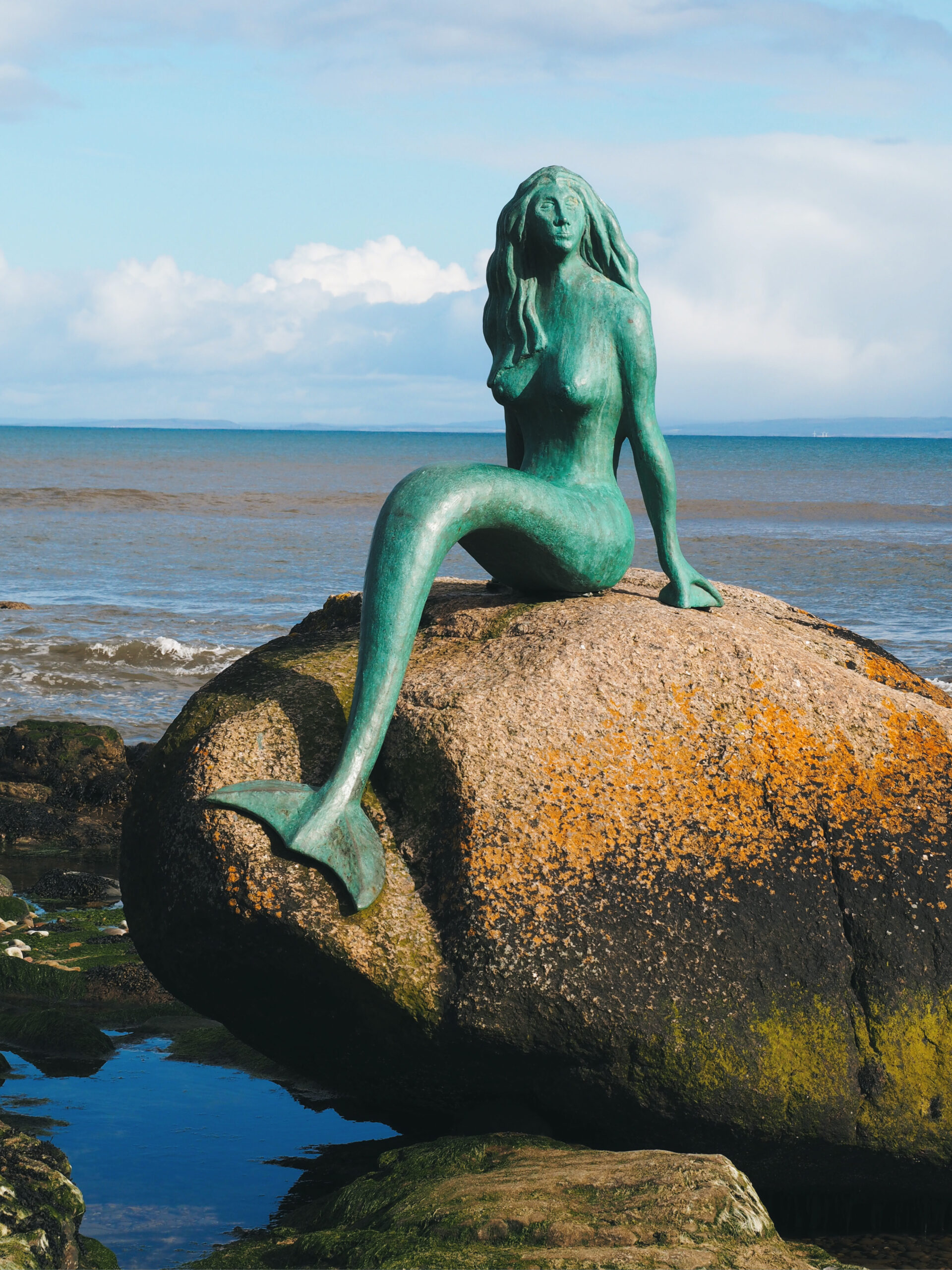
Perched on a rocky outcrop known as Clach Dubh, meaning ‘Black Rock’ in Gaelic, the Mermaid of the North is one of the most distinctive sights along the Easter Ross coastline. This ten-foot sculpture was created by local artist Steve Hayward in 2007 and replaced with a more durable bronze version in 2014 after the original was damaged in a storm.
The mermaid is inspired by local folklore, which tells of a fisherman who captured a mermaid and hid her tail so she could not return to the sea. After finding it years later, she escaped back to the water but continued to return to shore with fish for her children. You can visit her with a short walk of around 300 yards from the Seaboard Centre, following the Seaboard Sculpture Trail.
4. Hill o’ Many Stanes (Mid Clyth)
Scattered across a hillside near Mid Clyth, the Hill o’ Many Stanes is an unusual prehistoric monument made up of around 200 small standing stones arranged in more than 22 rows. Dating back approximately 4,000 years, the stones create a striking pattern across the slope, but their original purpose remains a mystery. Theories include their use for gatherings or ceremonies, or perhaps to track the movements of the sun and moon, but no explanation has been confirmed.
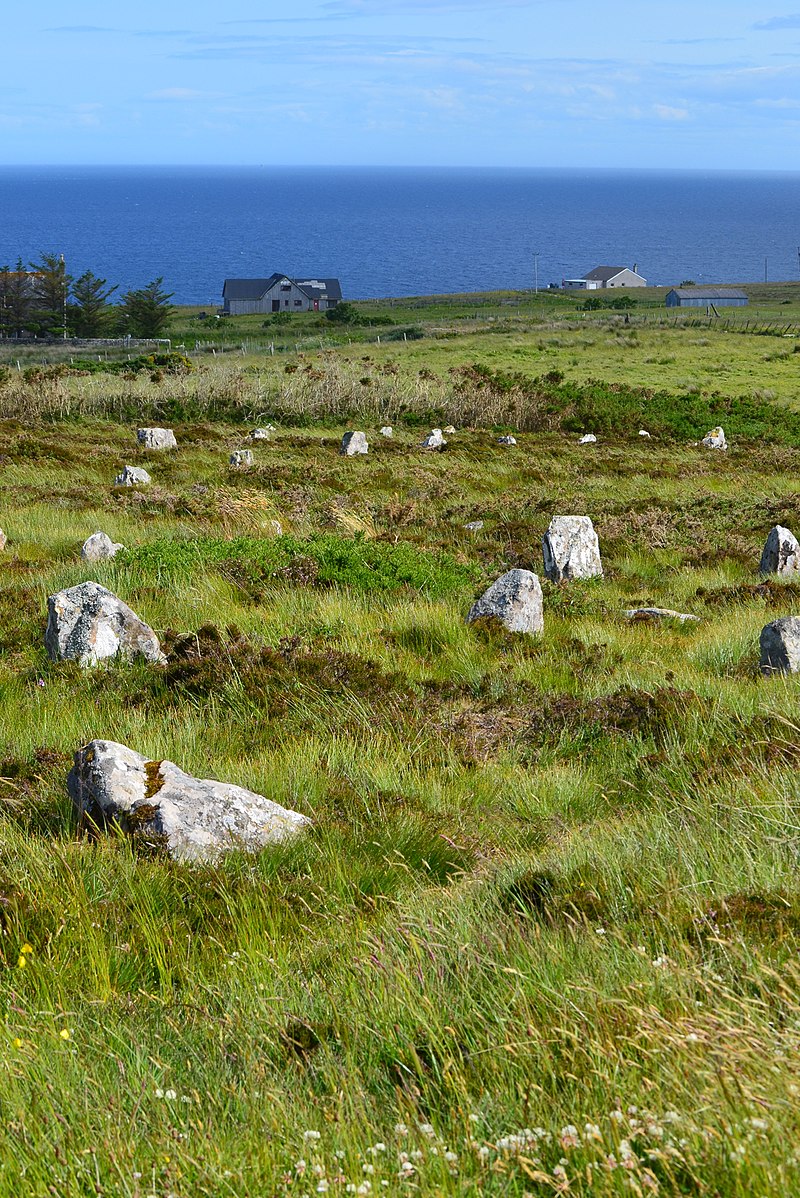
Hill o’Many Stanes. Photo by: Meghan F Davis [CC BY-SA 4.0 (https://creativecommons.org/licenses/by-sa/4.0)], from Wikimedia Commons
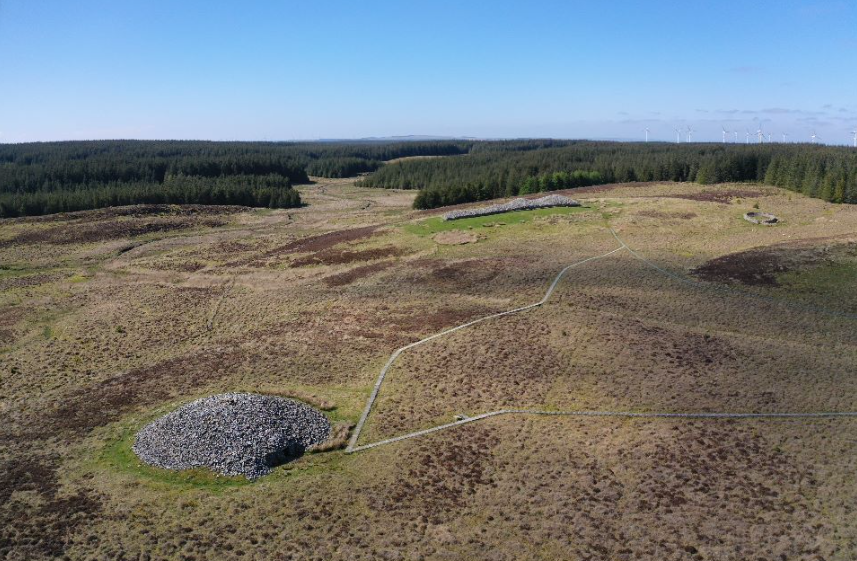
5. Grey Cairns of Camster (Camster)
Set among the open moorland of Caithness, the Grey Cairns of Camster are two remarkable Neolithic burial monuments built more than 5,000 years ago. The pair consists of a long cairn and a round cairn, both constructed from large stones and each with chambers hidden inside. Together, they offer a fascinating insight into the burial practices and beliefs of Neolithic communities in Caithness.
One of the most memorable parts of a visit is the chance to step inside the ancient chambers and explore their stone passageways. The cairns have been reconstructed in places following archaeological investigations, but their scale and setting still give a real sense of their age and significance.
6. Castle Varrich (Tongue)
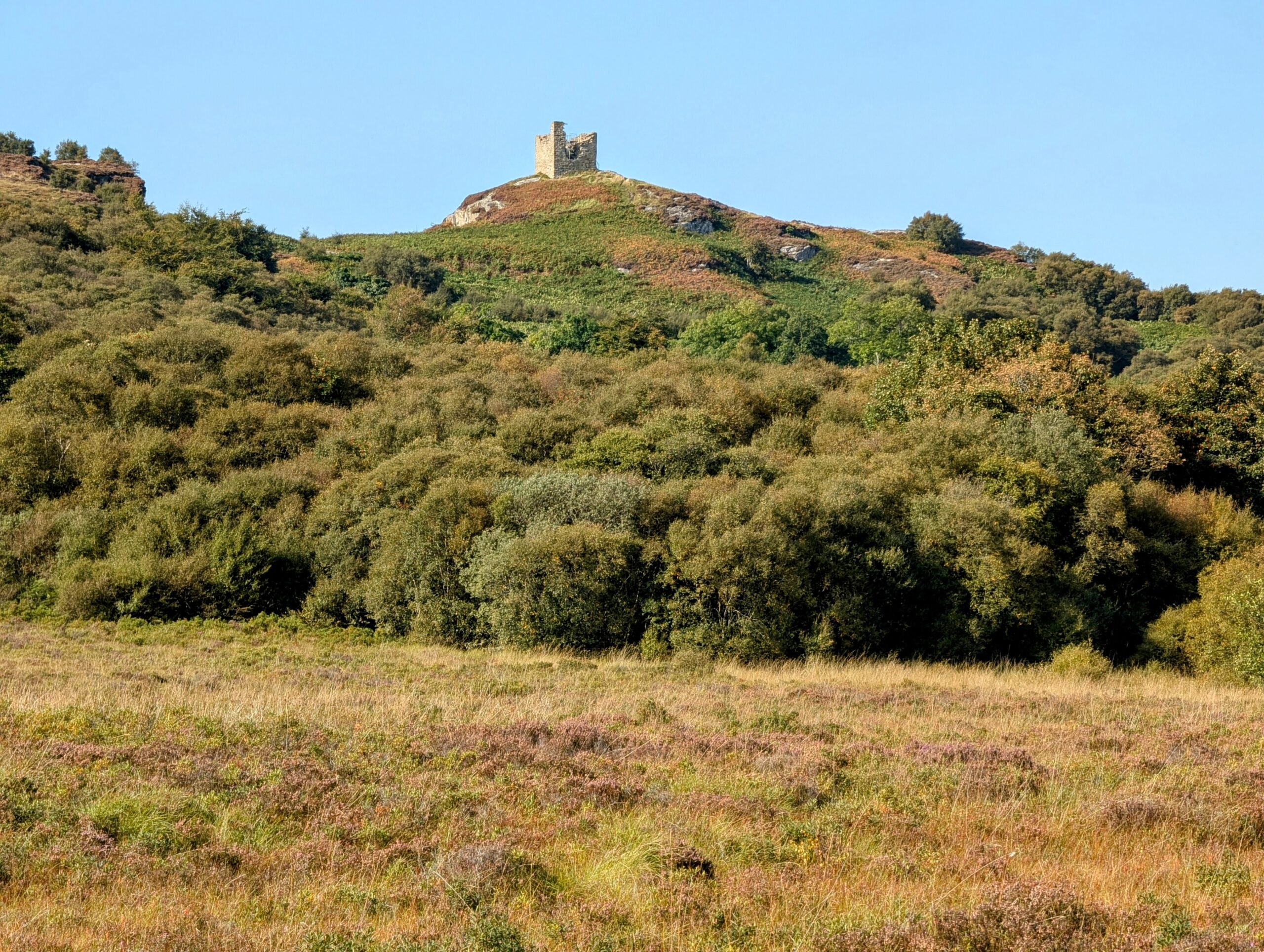
Perched on a rocky hilltop above the Kyle of Tongue, Castle Varrich is a small but striking stone tower with far-reaching views across the surrounding landscape. The castle’s precise origins are uncertain. Local tradition associates the site with the Bishops of Caithness and the Mackay clan, although its early history is not firmly established. The ruins are thought to date from the late medieval period, but their history remains something of a mystery.
Following conservation work, a staircase was installed inside the tower, allowing visitors to reach the upper level and take in the views towards the Kyle of Tongue, Ben Hope and Ben Loyal. It’s a rewarding stop for anyone exploring the village and its surrounding scenery.
7. The Unknown Sculpture (Borgie Glen)
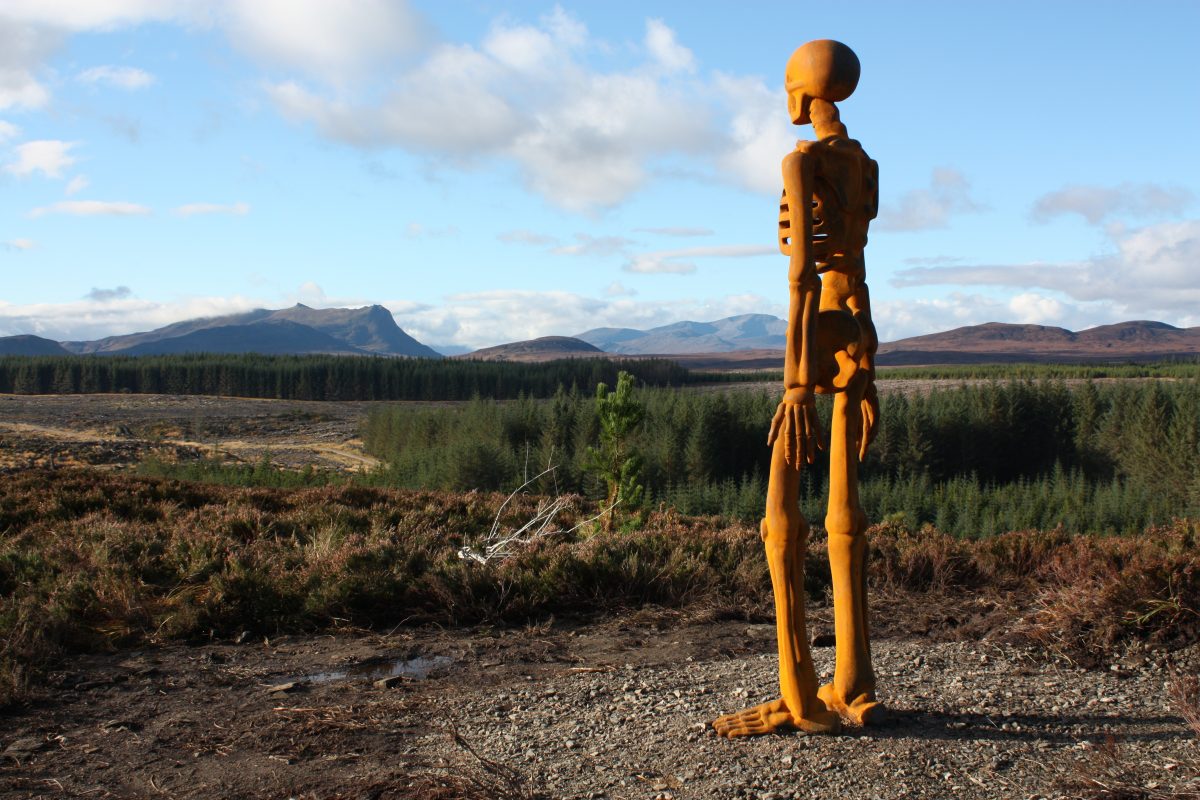
Rising from a hilltop clearing in Borgie Glen, The Unknown is a striking sculpture by Scottish artist Kenny Hunter. Standing around 2.6 metres (8.5 feet) tall, this unusual cast-iron figure takes the form of a skeletal giant, gazing across the forest towards the distant peaks of Ben Loyal and Ben Hope. Its mysterious appearance makes it an unexpected sight in the woodland landscape.
You can reach the sculpture by following the Lonesome Pine Trail, a 1.1km (¾-mile) circular walk through the forest. The route is graded strenuous, with a steep climb to the viewpoint.
8. Sandwood Bay (Blairmore)
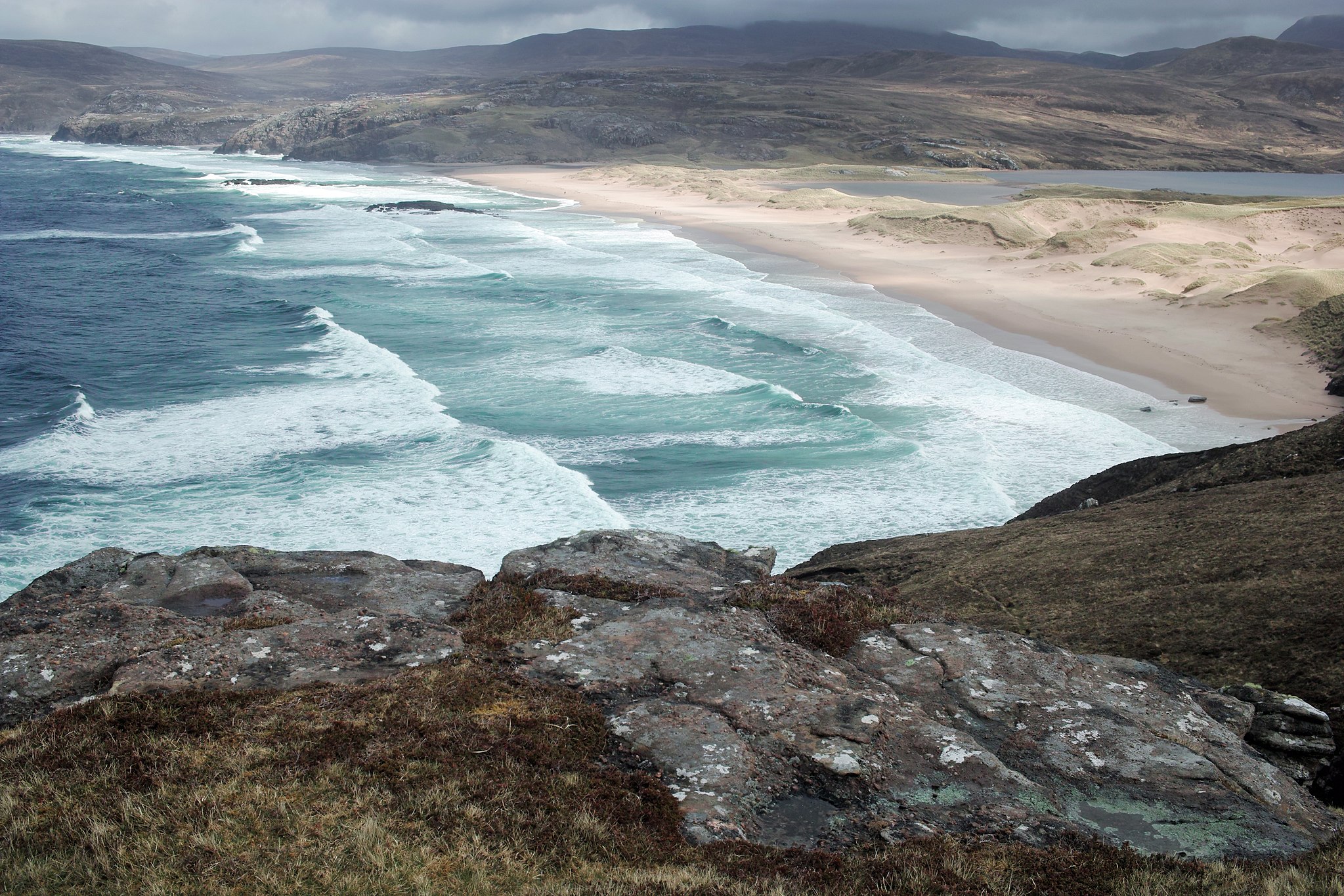
Wild, beautiful and wonderfully remote, Sandwood Bay is often described as one of Scotland’s most remote beaches. This spectacular stretch of pale sand is backed by sweeping dunes and freshwater Sandwood Loch, while the distinctive sea stack of Am Buachaille, meaning ‘the Shepherd’, rises from the sea at the southern end of the bay. With no road access, the beach feels a world away from everyday life and is a memorable detour for those exploring the far north-west Highlands.
Part of the appeal is the journey itself. From the John Muir Trust car park at Blairmore, the walk to the beach is around four miles (6.4km) each way, crossing open moorland. The route can be wet and uneven, so allow plenty of time and be prepared for changing weather. Sandwood is also part of an active crofting estate, so please respect the land, livestock and local community.
9. Knockan Crag (Elphin)
For a fascinating glimpse into Scotland’s geological past, make a stop at Knockan Crag National Nature Reserve. Knockan Crag is best known for the Moine Thrust, a major geological feature that demonstrates how older rocks were pushed over younger rocks by enormous tectonic forces. Its discovery helped transform our understanding of how the Earth’s crust is shaped.
Follow the trails to explore this remarkable landscape, where geology meets art and poetry. Look out for the striking Globe sculpture by Joe Smith, sculptures of the pioneering geologists Peach and Horne, and poetry by Norman MacCaig carved into the rocks. Along the way, enjoy impressive views across the mountains of Assynt and Coigach.
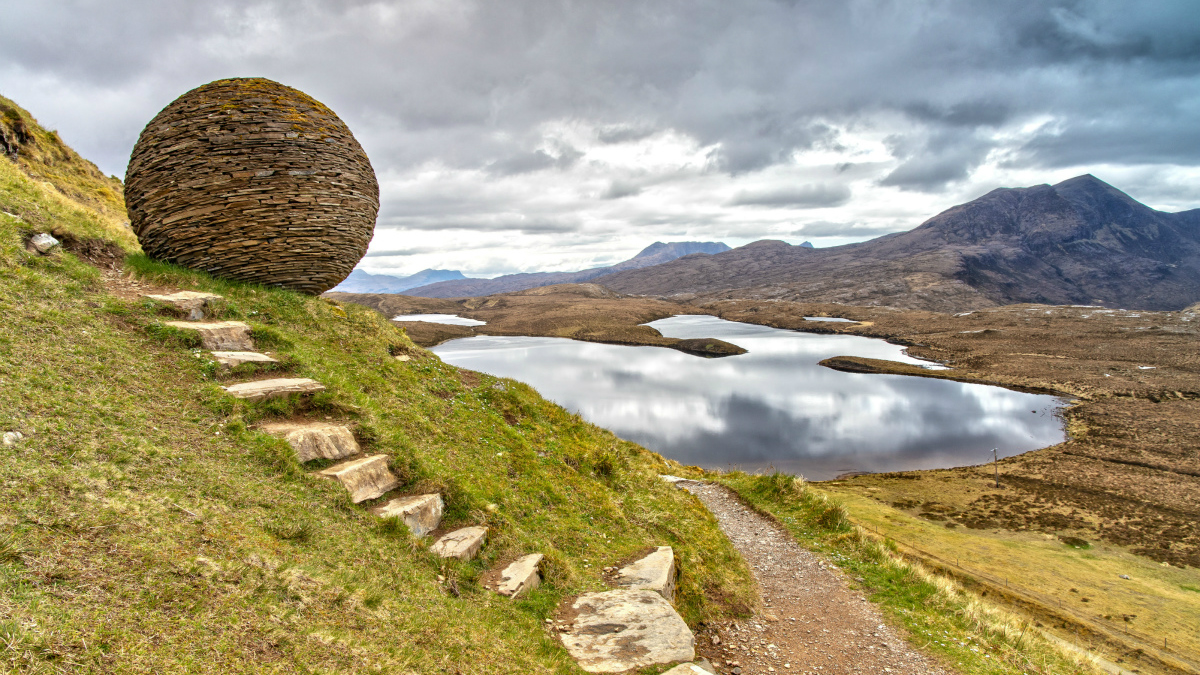
The Globe At Knockan Crag (c) susanne2688 stock.adobe.com
10. Bone Caves (Inchnadamph)
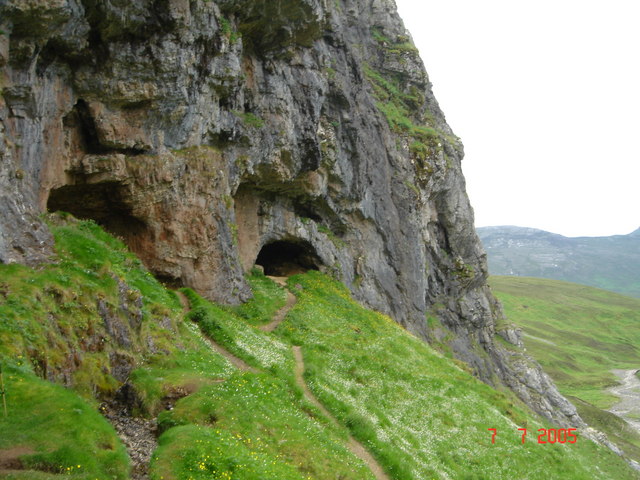
Set into the limestone cliffs of Creag nan Uamh, the Bone Caves offer a fascinating glimpse into Scotland’s distant past. Four caves overlook the valley below, where excavations uncovered remains of animals that once roamed the Highlands, including bears, wolves, lynx and Arctic foxes. Reindeer bones and antlers were also found, providing clues to the wildlife that lived here during a much colder period in Scotland’s history.
Reaching the caves is part of the experience. The walk follows the beautiful limestone valley of the Allt nan Uamh, where the stream disappears underground before emerging further down the glen. The route is around 4.5km (2.75 miles) return, with a short, steep climb up to the caves. Allow around 1.5–2 hours and wear sturdy footwear.
11. Hermit’s Castle (Achmelvich)
Perched on a rocky headland beside Achmelvich Beach, Hermit’s Castle is one of the most unusual little structures on the Assynt coast. Despite its name and fortress-like appearance, this tiny concrete building isn’t a medieval ruin. It was built in 1950 by David Scott, an architect from Norwich, and is classified as a folly. With its narrow entrance, tiny windows and unusual shape, it’s a fascinating sight on this stretch of coastline.
The castle is reached on foot from Achmelvich Beach, with a short walk across the headland to find it. Its unusual design and dramatic coastal setting make it a fascinating detour while exploring this beautiful stretch of coastline.
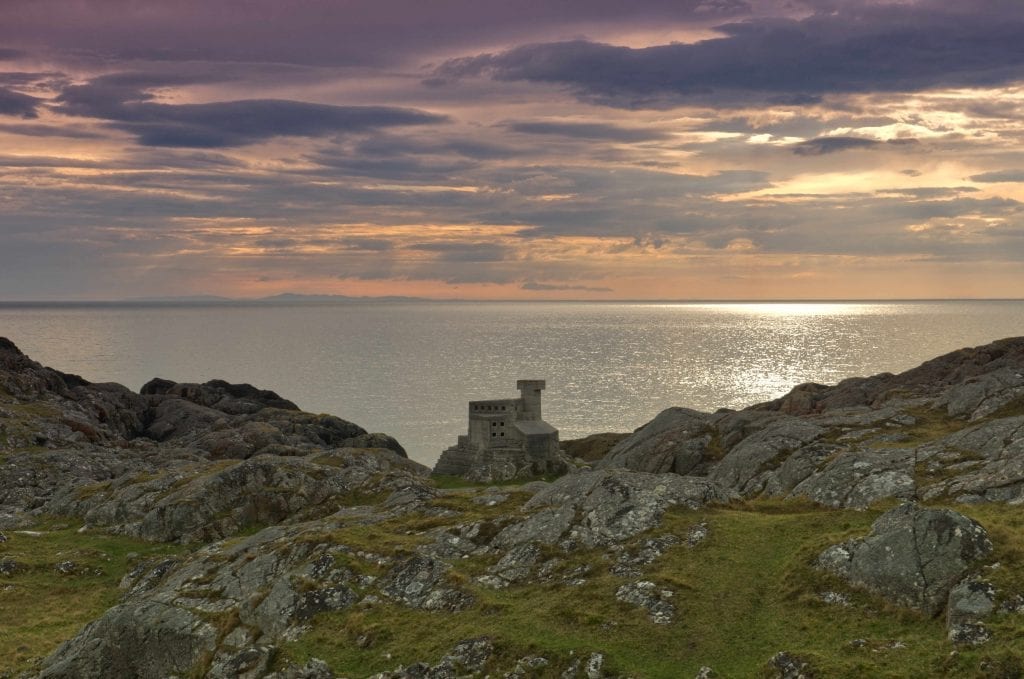
Hermit’s Castle. Photo by: NC500 Pods
12. Vestey’s Beach (Achmelvich)
Just round the corner from the popular Achmelvich Beach, Vestey’s is a smaller sandy cove that offers an alternative on this beautiful stretch of the Assynt coastline. It has the same pale sand and clear waters as its better-known neighbour, making it another lovely spot to discover while exploring the area.
Reaching the cove involves a short walk over the headland, with a descent towards the shore over a mix of grassy and rocky ground. The path can be tricky underfoot, particularly when wet, so take care as you make your way down.
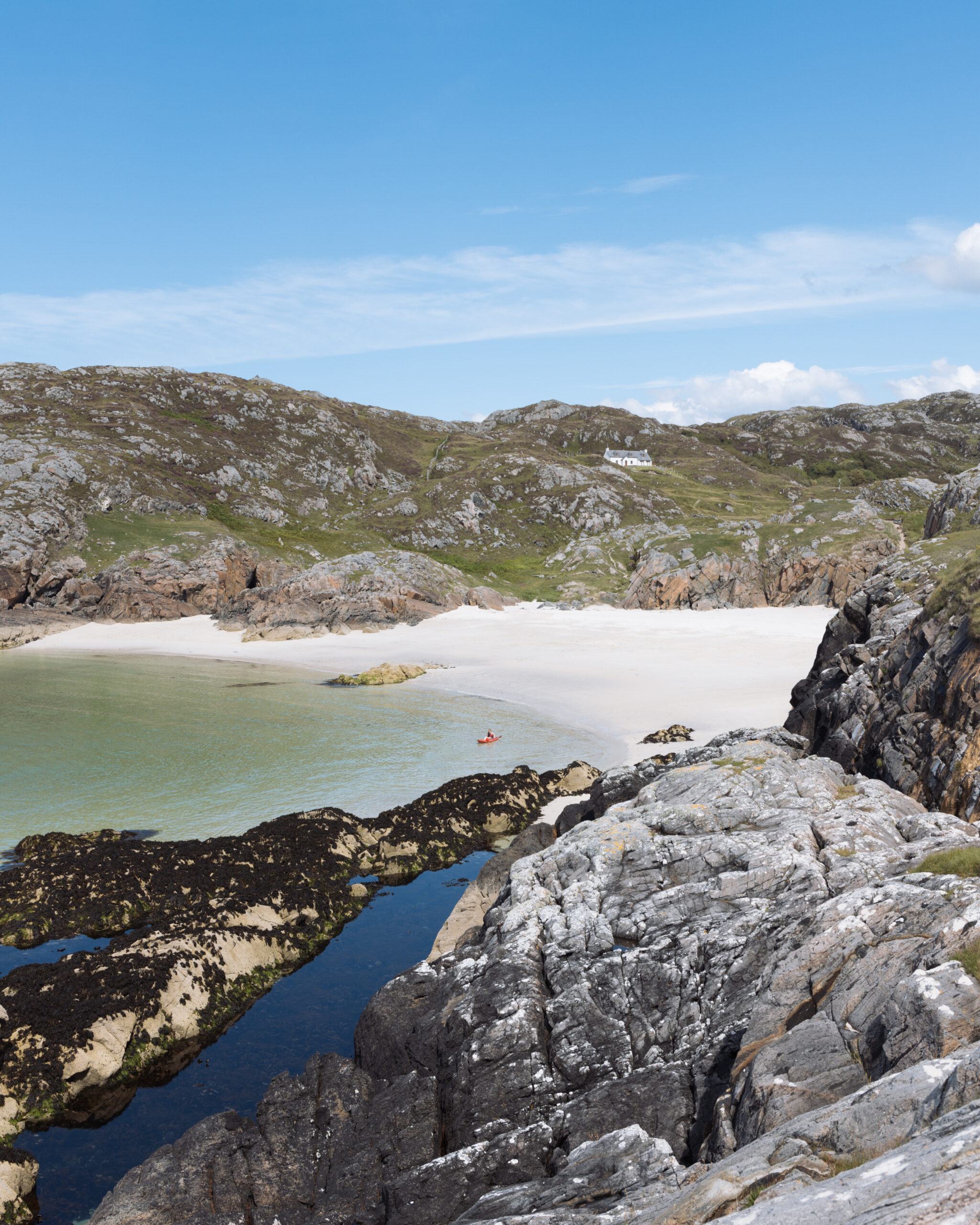
Vestey’s Beach. Photo by: Eddie Fitz
13. Clashnessie Falls (Clashnessie)
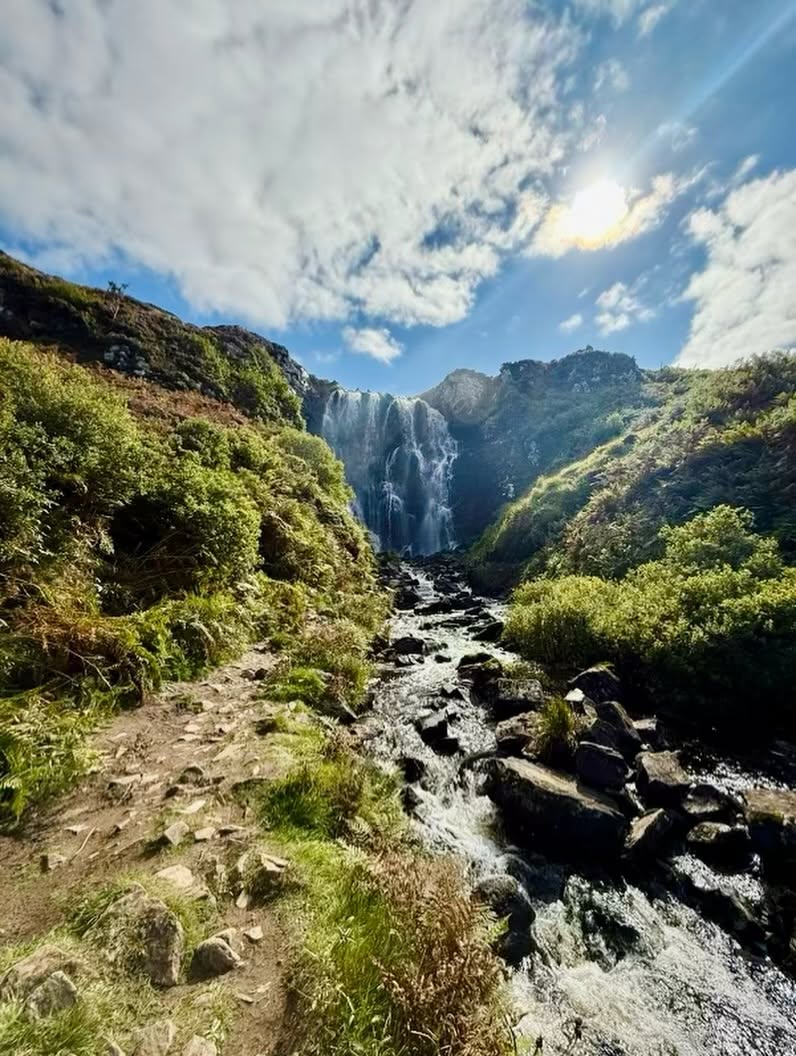
Rising around 15 metres above the surrounding landscape, Clashnessie Falls is an impressive sight on the Assynt coast. The water cascades down a rugged rock face into the burn below, with the sound of the falling water growing louder as you approach. After heavy rain, the flow can be particularly dramatic, making this a lovely detour from the coastal road.
The walk from Clashnessie Bay is around 2.25km (1.4 miles) there and back, taking approximately 45 minutes. The route follows a road and track before continuing alongside the burn towards the falls. You’ll need to cross stepping stones, and the ground can be wet and boggy, so sturdy footwear is recommended.
14. Arctic Convoy Museum (Aultbea)
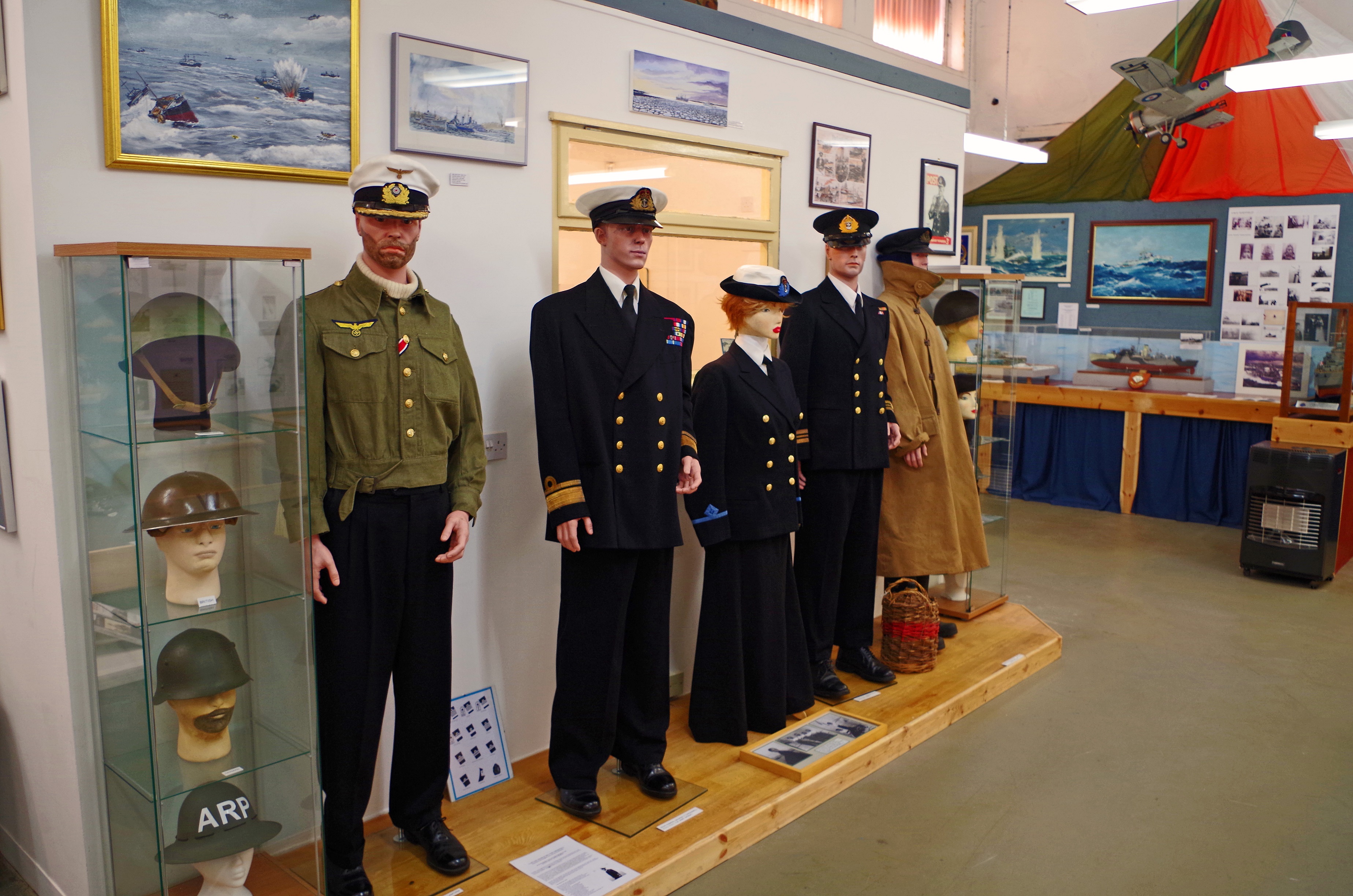
Discover a fascinating chapter of Highland history at the Arctic Convoy Museum in Aultbea. During the Second World War, Loch Ewe played a vital role as a gathering point for Allied Arctic convoys carrying essential supplies to the Soviet Union. Merchant ships assembled here before making the perilous journey through freezing Arctic waters, escorted by naval warships and facing the constant threat of German aircraft, surface ships and U-boats.
The museum brings these remarkable stories to life through a collection of wartime photographs, personal accounts, uniforms, ships’ logs, medals and model vessels. Outside, the Snowdrop Memorial Garden commemorates the 3,000 Allied servicemen who lost their lives in the Arctic waters. It’s a fascinating and moving stop that reveals a lesser-known part of the North West Highlands’ wartime history.
15. Touchstone Maze (Blackmuir Wood)
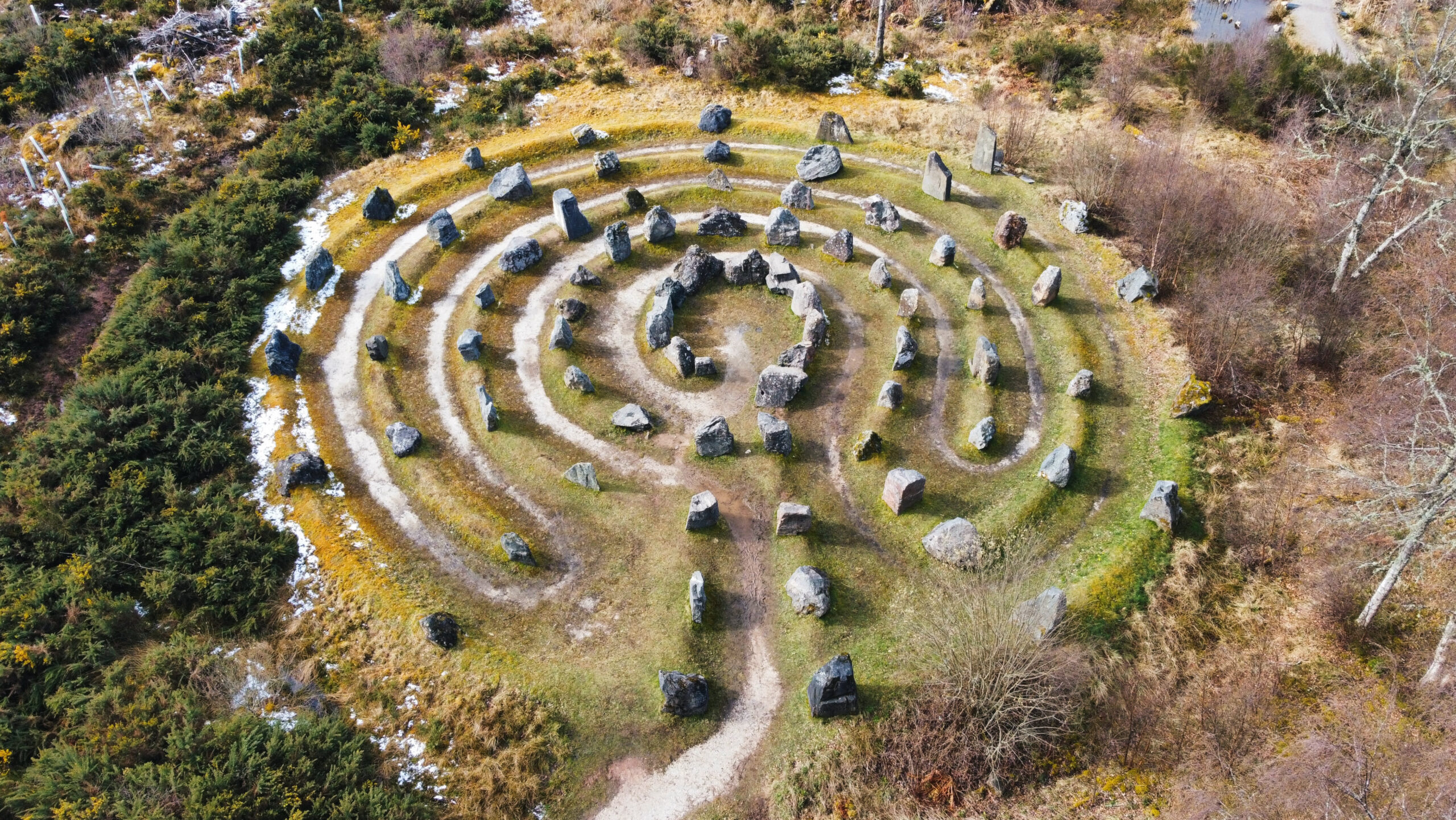
Hidden among the trees on the hillside above Strathpeffer, the Touchstone Maze is one of the Highlands’ more unusual attractions. This fascinating stone labyrinth features more than 80 rocks gathered from across the Highlands and Islands, each representing a different part of Scotland’s remarkable geological landscape. Among the rocks is Lewisian gneiss, an ancient rock type found in north-west Scotland, with some examples dating back around three billion years.
Follow the winding path between the stones towards the centre of the maze, taking time to look closely at their different colours and textures. Set high above the surrounding woodland, the maze also offers far-reaching views across the Highland landscape. The waymarked circular trail from Blackmuir Wood car park is around 3.6km (2¼ miles), taking approximately an hour and a half. It’s graded moderate, with some steady uphill sections.
We hope this list has given you some inspiration for your next North Coast 500 adventure and introduced you to a few new places to add to your itinerary.
As you explore, remember to travel responsibly. Respect local communities, wildlife and the natural environment, follow the Scottish Outdoor Access Code and leave each place as you found it.
Planning your journey? Read our North Coast 500 travel guide for everything you need to know before setting off.